




Chimpanzees
Intelligence, Social Bonds, and the Fight for Their Survival
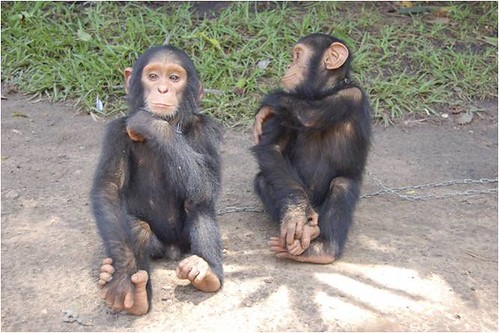
Few animals resemble us as closely as the chimpanzee. We share roughly 98% of our DNA with this species, and it only takes a few minutes of watching them — solving a problem, comforting a companion, or crafting a tool from a branch — to understand why. Chimpanzees live in complex communities, communicate through elaborate gestures and sounds, and display a far richer emotional life than we once assumed.
💡 Quick Fact
This guide walks through the intelligence of chimpanzees, their social lives, how they communicate, common myths, and why their conservation is so urgent.
Why Chimpanzees Matter
Chimpanzees (Pan troglodytes) are, along with bonobos, our closest living relatives. Studying them doesn’t just help us understand this endangered species better — it also sheds light on the roots of many human behaviors: tool use, group culture, and even certain aspects of our own psychology.
Advanced Intelligence
They solve problems and craft tools
Social Bonds
They form complex, lasting communities
Forest Guardians
They disperse seeds and sustain the ecosystem
A century ago there were roughly a million chimpanzees in Africa; today only around 170,000 to 300,000 remain, mainly due to habitat loss, poaching, and disease. Understanding chimpanzees is the first step toward protecting them.
🔬 The Science Behind Chimpanzees
% of DNA shared with humans
% of the population lost over the last century
% of communities with their own distinct tool-use traditions
Intelligence and Tool Use
For decades, it was believed that only humans made and used tools. Chimpanzees proved that idea wrong:
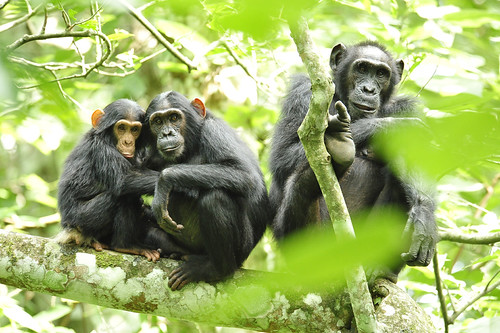
They modify branches to fish for termites, use stones as hammer and anvil to crack nuts, and even sharpen sticks for hunting.
In both lab experiments and field observations, chimpanzees plan several steps ahead to reach food that’s out of immediate reach.
They use more than 60 distinct gestures, facial expressions, and vocalizations to communicate precisely within the group.
Social Life: Complex Communities
Chimpanzees live in communities of up to 100+ individuals, with a rich social structure that includes hierarchies, alliances, and lasting family bonds:
🎯 Explore an Aspect of Their Social Life
A dominant male leads the group, but his power depends more on alliances than on brute strength.
Infants depend on their mothers for years, learning almost everything they need to survive by imitation.
Chimpanzees form lasting friendships and often actively reconcile after a conflict.
Myths vs. Facts
Few animals carry as many misconceptions as chimpanzees. Let’s clear up some of the most common ones:
🐵 “They’re just big monkeys”
Chimpanzees aren’t monkeys at all — they’re great apes, just like gorillas, orangutans, bonobos, and humans.
😊 “They’re always smiling”
Baring teeth in a chimpanzee is usually a sign of fear or submission, not happiness as it would be in humans.
🐾 “They make good pets”
Adult chimpanzees are extremely strong and unpredictable; they belong in the wild, not in a human home.
The Conservation Challenge
Chimpanzees are classified as an endangered species. Here are the main threats they face and how you can help:
⚠️ Main Threats
Deforestation
Poaching
Disease
Habitat Loss
🌳 Support Reforestation
Conservation organizations work to restore the natural habitat chimpanzees need to survive across Africa.
📚 Spread Accurate Information
Sharing real facts about chimpanzees helps counter the myths that fuel illegal wildlife trade.
🛒 Choose Conscious Products
Look for certified products that don’t contribute to deforestation of their habitat, like sustainable palm oil.
Chimpanzee Behavior by Season
As with many tropical forest species, their behavior shifts with the wet and dry seasons. Pick a season:
Conclusion: A Mirror of Our Own Nature
Watching chimpanzees is, in many ways, watching ourselves from another angle: their intelligence, family bonds, and emotional lives remind us how much we share with the rest of the animal kingdom. Protecting them isn’t just about saving a species — it’s about preserving a unique window into our own origins.
Want to learn more?
Look into primate sanctuaries and conservation organizations near you, and share what you learned!

